"Keep tabs on our guides in the field"

15 May, 2009

Northern Exposure, Queensland

By Pedro O'Connor: The "Best Job in the World" was recently won by an excited young Englishman. He has no comprehension just how amazing his next 6 months of living on the Great Barrier Reef is going to be. I have been fortunate to grow up with the reef as my playground and I am still blown away every time I spend a day on the water after 40 plus years.

I was privileged to have the opportunity to show off my backyard of Port Douglas, the Daintree Rainforest and Lizard Island to a small group of clients. The flight over the Ribbon Reefs, en route to Lizard Island, puts into context the immensity of the reef system, yet it is not until you place you head underwater that you start to comprehend its complexity. Descending onto Lizard Island, the undisputed gem in the crown, one client declared the main beach at the lodge as "the best I have ever seen" ... and there are 23 more like it scattered around the island!

Ranked as one of the top 5 dive sites in the world, you can’t miss the Cod Hole. My Brazilian friend (who had never snorkelled in her life) could not believe her eyes and stayed mesmerised by the natural splendour of the diversity of marine life. She was in a trance-like state for some time after! After a quick flight back to Port Douglas we lounged in luxury on a 72 ft yacht at Low Isles, while enjoying sunset drinks and some of the best and freshest seafood on the planet. Juxtaposing nicely, we then ventured to a typical Aussie pub for the weekly Cane Toad Races. Our illustrious leader from Los Angeles was fortunate to be drawn as a jockey but was pipped at the post and came in second after many anxious moments and laughs.

We 'hunted' and 'gathered' with local aborigines, and visited a world of tropical fruits of all colours, shapes, sizes and flavours unknown to most people. A sensory delight in so many ways, this is a must see on any North Queensland itinerary. As the ultimate refresher we then drift snorkelled down a pristine rainforest stream, floating through a wonderland of natural beauty.

I could continue to wax lyrical but I believe the email I received today from my new Texan friend says it all – “The landscape, water and wildlife are some of the most incredible I have ever seen. But far more important than that I had the pleasure and privilege of meeting some of the most wonderful people in the entire world. I can't even put in to words how much I appreciate the kindness that was shown me during my visit and have to tell you that in all my travels, because of each of you, this was by far the best. I look forward to working with you, and most especially to our next visit." I rest my case – come see for yourself!

If you would like more information on the islands of the Great Barrier Reef, the Daintree Rainforest, or Port Douglas and its surrounds, please contact Pedro O'Connor at poconnor@epicprivatejourneys.com.


04 May, 2009

Hiking the Bay of Fires, Tasmania

By Kirstie Walia (ne'e Butterworth): I have just returned from guiding a small group of clients through the Bay of Fires in Tasmania. Our principle destination was the wilderness paradise of the north-eastern coast, where we trekked alongside the Mt William National Park and into the spectacular Bay of Fires, over four days. Preceded by a luxurious overnight at the recently refurbished colonial Quamby Estate (just outside of Launceston), we were briefed, kitted up and driven to the starting point of our trek; the very top right hand corner of Tasmania. Heading south we covered between 9km and 11km on the first two days. Although that may not sound a lot to most active sorts, it is worth noting that this is primarily on sand, sometimes over boulders and through heath-land, and carrying a 10kg pack – not something one does every day. Saying this, if one is of reasonable fitness, the walk is broken into manageable segments and frequent stops are made for drinks, food and chocolate (and I seriously thought I would lose weight on this trip…).

We were blessed with magnificent autumnal weather, incredible clear skies, turquoise waters and bright rolling surf every day. The first night on the trail is spent at a semi-permanent eco-camp nestled behind sand dunes, just off the beach. While simple, it is effective and surprisingly comfortable. The second and third nights are at the Bay of Fires Lodge, an architecturally significant and awarded eco-lodge, inaccessible by road. The third day is spent kayaking through the peaceful Ansons River. Our young professional guides and lodge manager amazed us throughout, with their knowledge and commitment to the environment, and in the kitchens with enormous home-cooked meals, ranging from steaks, to fresh bread, home-cooked pies and desserts. Our nights dropped to near-freezing, however thermals are recommended whenever you travel, as is good quality sun protection to prevent glare from the beach. Packs and rain jackets are provided.

I then spent two days with Doris White (Virtuoso VAST Board Member) visiting Cradle Mountain and its surrounds. From here, we can arrange participation in the Overland Track - a fantastic hut-to-hut trek over six days, staying at private huts away from the public path, fully guided and catered, complete with heaters and bedding.

Walks run from October to May each year. For more information on either of these treks, please contact Kirstie – kbutterworth@epicprivatejourneys.com


Botswana - The Months Less Travelled

By Kirstie Walia: During March and April, water is nearing its peak in the Okavango Delta and this year’s run-off from Angola has been particularly high. Naturally you would expect game sightings to be limited as there is plenty of food and water to go around, however you might just be pleasantly surprised.This is one of the biggest floods in many, many years..

I recently returned from a magnificent trip into the Delta: Travelling at this time of year one is privy to a different Africa – the wildlife is not as desperate or combative for food, which makes for a more relaxed game viewing experience. The Delta at its most beautiful, with plenty of animals to peacefully observe. Game aside, the greenery stretched for miles as we took to the air to transit between camps. Some hops were short and I wished for longer air time to further imprint this unique world image into my mind.

Being at the end of the official “wet” (rainy) season meant that we were graced with several sightings of young game. Delta animals will wait for the first rains to drop their young, to ensure that there is enough food and water to see them through their first tough months. Breeding herds of elephants instinctively gathered around the newest addition when they heard our boat or Land Cruiser put-put by. Gangly young giraffe stayed glued to their mother’s side in search of the next tasty acacia thorn tree, baby hippo found their footing in the muddy banks. Just delightful.

After enjoying the water-based activities of Xigera camp, we were also blessed with quite a show. Right beside the airstrip, a female leopard sprung atop a termite mound and sat, carefully changing position as she thoroughly surveyed her environs.

The ‘moral’ of this letter is that it doesn’t have to be middle of the dry season for you to visit Botswana. Whether a first time visitor or a returning traveller, you will be just as impressed by this ever-changing wilderness. Either way, I am sure that you will depart, like me, with the desire to return again and again.


Green Season in the Ruaha

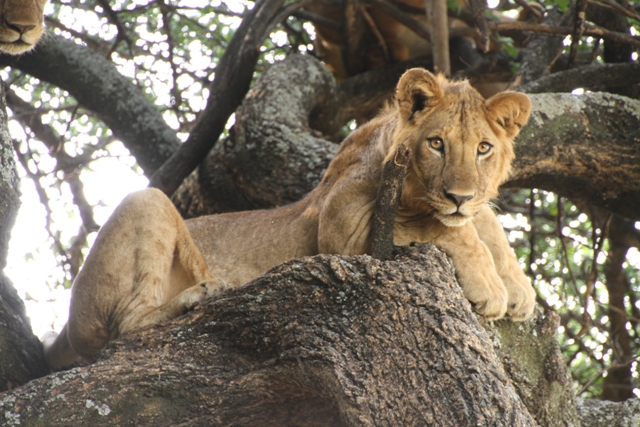
By Rob Barbour: I was recently in Ruaha with some clients from England, staying at Kigelia Camp. Although it was still considered green season I was pleasantly surprised by the amount of wildlife which seems to be resident there all the time. These lions were found on an overcast day sunning themselves out in the open after a chilly night.

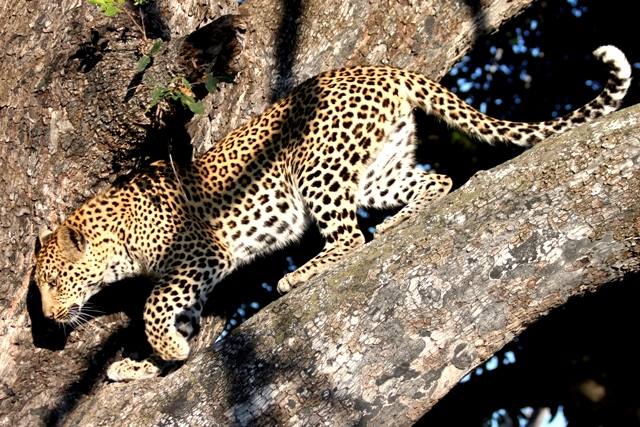
We had a wonderful siting of a young female leopard in a baobab tree who was also very relaxed. From her lofty vantage point looking out over the Mwagusi Sand River she had a perfect view of everything around her, whilst catching the warmth of the early morning sun.

I was also very happy to come across these 5 adult dogs as it has been a while since they have been sited. They were not the prettiest or healthiest dogs I have seen but, none the less, wild dogs.

We also had great sitings of both lesser and greater kudu and the usual congregations of elephant. One bull elephant (with exceptionally thick tusks and the same degree of confidence) seems to have taken a liking to our camp area and was drinking from my shower bucket on more than one occasion! To find out more about Kigelia Camp, please see our previous posting entitled "Fantastic New Camp in Tanzania" (Sept 08).

04 March, 2009

A Taste of Tasmania

Do you want to step back in time and take life at a relaxed pace? Then Tasmania is the place to do it. The sparse population ensures there is ample opportunity to get away from the madding crowds with little effort. Think miles of endless beaches with nobody on them. The local people are super friendly and have great civic pride, which is evident in the many beautifully restored townships; the majority of which date back to the early 1800’s when indentured convict labour was exploited to build the colony of Van Diemans Land.

Much of Tasmania remains untouched by human habitation and huge tracts of wilderness are World Heritage listed. Some of the treks within the National Parks are world class and cater to the “Sauvignon Shufflers”, those folks who enjoy the challenge of a hard hike during the day yet demand their luxuries at night. The freshness of the local produce and quality of the island’s wines are a match made in heaven if the guests' accolades are anything to go by.

I took the opportunity on this occasion to reconnoitre the best locations for a ‘Tassie Devils’ Harley Davidson ride later this year. I hit the road running and scouted out scenic routes that showcase the island's classic beauty, intriguing history and pubs with plenty of interesting characters. All of these are in abundance within a short ride of each other on this postage stamp sized island.

Get your motor running and get down here! For more details please contact Pedro O’Connor at poconnor@epicprivatejourneys.com.


13 February, 2009

In Search of the Elusive Snow Leopard

The elusive snow leopard, an animal Ian Johnson has always dreamed of trying to find! In December Ian flew to the Jammu Kashmir Province of India; this is the extreme northern part of the country bordered by Tibet, China and Pakistan.

A friend, Dr Raghu Chundawat, who is the former director of the Snow Leopard Trust, had invited Ian to visit. He is the world’s leading authority on snow leopards in this remote part of the world, having studied them for nearly ten years.

An hour’s flight from New Delhi took them to Ladakh in Leh, easily accessible by all major airlines. They spent two days acclimatising at the ancient city’s altitude of 9,800 feet (nearly 3,000 metres) using the time to visit the white washed 'Gompas', Buddhist monasteries. This period of acclimatisation was imperative for the trekking ahead - at a variety of altitudes ranging from 9,000ft to 19,500ft (2,740m - 5,940m).

The tracking trek for the shy and rare snow leopard began in Hemis National Park. The exclusive expedition consisted of Dr Chundawat as Expedition Leader, their own Chita tracker and mountain guide, two camp staff and a chef, plus donkeys and ponies.

Over the next 5 days the group trekked and searched numerous spectacular valleys, crossing many frozen rivers protected and blessed by Ladakhi prayer flags. They also visited remote Ladakhi homes where the hot butter tea breathed life back into their chilled bodies. Temperatures reached minus 15 degrees Celcius (5 F) at night and most days were around minus 5 C (23 F). This was unusually warm for December, which accounted for little snow in the valleys; usual temperatures are between -10 and -25 C (14 to -13 F). The beauty of doing this trek in the middle of winter is you have this entire area to yourself, plus it holds the best chances of spotting the snow leopard.

Ian and Dr Chundawat were treated to many spectacular sightings of Bharal or Blue Sheep and Ladakh Urial on steep knife-edge cliffs - these are the snow leopards favourite prey. Golden eagles, Bearded and Griffon vultures were also ever present, scouring the slopes and valleys for any sign of a kill. It was not to be on this trip, with plenty of fresh signs of both Tibetan wolf and snow leopard every day. These ghostly predators remained but shadows in the night... Ian cannot wait to go back to resume the search in this magnificent mountainous region - Ladakh: "The Land of High Passes”!

Epic Private Journeys is offering one privileged departure per year, with Dr Raghu Chundawat as Expedition Leader. For more details, please contact us: epic@epicprivatejourneys.com.

12 February, 2009

Canyoneering in Arizona

Brad Horn and Kevin Jackson (Epic’s “Man in the Americas”) recently completed a canyoneering expedition in the wilds of Arizona.

Canyoneering is Epic’s latest offering in the US and this trip was designed as a showcase for a select few high powered Travel Agents. Programmes are customisable and can be tailored to suit any group and duration, ranging from one day to multiple nights.

What an experience! We spent our time in a place called Waterhole Canyon, a slot canyon just south of Page. It's one of the last tributaries to Lower Glen Canyon before the Colorado River emerges at Lee's Ferry. Words can’t do justice when describing the exhilaration of canyoneering; large rappels, sheer walls, the reddest sandstone and inordinate scrambling over the canyon floor. The images below hopefully paint the picture.


10 February, 2009

Groote Eylandt - A Fisherman's Paradise

The warm tropical waters that brew cyclones at the start of the monsoon season in far northern Australia make for hot fishing action. Pedro spent a few days recently at Escape Sportfishing and Wilderness Lodge on remote Groote Eylandt in the Northern Territory. He came home smiling after catching some prize fish.

The eco-friendly, tented safari camp comprises 12 twin share tents each with en suite, air conditioning and feather-soft beds that ensure you sleep well after a long day hauling in fish. The fishing philosophy is one of catch and release, but invariably a sample reaches the dinner table. The mouth watering delights of fresh coral trout, red emperor or Spanish mackerel will be sure to please the most discerning palate.

An amazing amount of research has gone into selecting the best boats, tackle and specialist guides for this remote location. A fleet of 26 ft Haines Hunter Prowlers, which are powered by 450 hp and cruise at 40 knots, allow guests to travel to all points of the island. The convoluted coastline provides numerous sheltered bays that are ideal for salt water fly fishing; the rewards include huge trevally, giant herring, barramundi, queenfish and even sailfish in the drier months of October – December.

A fleet of ATVs allows clients to explore the back roads and pristine floodplains of the island. A strong indigenous culture flourishes and evidence of thousands of years of habitation can be clearly seen in the galleries of aboriginal rock art. The freshwater creeks, which are spring fed from New Guinea, offer safe swimming and superb lunch time locations.

For anyone who wants to catch the biggest fish of their lives, this is the place to visit.


17 December, 2008

Exceptional Lion Kill Footage

Taken by Brad on a recent safari in Botswana, we offer you a snippet of this footage showing the battle between a pride of lions and two buffalo.

Please click on the image to download the video. It may take a few minutes to load, but please be patient - it's worth it!


20 October, 2008

Close Call for Legadema

Brad recently returned from guiding a former US Ambassador and their friends on a safari to Botswana, Zambia and South Africa. The trip started in Cape Town and ended at Singita, with stops at Victoria Falls and Mombo Camp in the Okavango Delta, Botswana. The game-viewing was spectacular. Undoubted highlights were the West Pride at Mombo killing a buffalo and a couple of encounters with the legendary Nat Geo leopard, Legadema and her cubs. On one occasion Legadema and her cubs had a close call with a troop of baboons. She and the cubs took refuge in some dense bush and thereafter under one of the game-drive vehicles. This was a lucky escape as baboons have been known to kill leopard cubs when the opportunity presents.

Below is a small selection of pictures taken by one of the group, Ginny Edlavitch. These were taken with her small “point and shoot”. Talk about “up close and personal...”.


25 September, 2008

Fantastic New Camp in Tanzania

Brad Horn has just returned from safari in Tanzania and Kenya. At the end of his travels he visited a fantastic new camp in Ruaha National Park which is due to open in the very near future. For those that don’t know, Ruaha is one of the jewels of East Africa. Located in the south of Tanzania, Ruaha is as far off the beaten track as it gets and superlatively wild. Indeed in Brad’s view it is one of Africa’s best kept secrets. Ruaha is a unique transition zone where East and Southern Africa species of fauna and flora meet against a dramatic topographical backdrop; massive granite outcrops, elephant-battered baobabs in prolific numbers, brilliant ochre-red earth, pale russet grasses and parched tentacles of wide sand rivers.

Kigelia Camp is a seasonal mobile camp ,aptly named for its situation among a grove of sausage tress (Kigelia Africana). Comprising 6 rustically elegant tents, the camp is situated on the Ifuguru sand river, at the heart of “game central”. Brad had lions kill a warthog one evening immediately behind his tent. Needless to say a very noisy night with the squabbling and roaring. Kigelia is a great addition to Ruaha which, up until now, has seen a dearth of upmarket options in the “game hotspot” of the park.


09 September, 2008

Pregnant Cheetah Kill

Following his trip to the Ruaha, Rob made his way to Kenya and Tanzania with a New York family. They travelled to the Masai Mara, Ngorongoro Crater, Sasakwa Lodge Grumeti Reserves in the northern Serengeti, and then went on to Mnemba Island on Zanzibar.

In the Mara they witnessed the wilderbeest migration, by hot air balloon, as it started to head south into Tanzania to follow the rains. They also had an excellent sighting of a female white rhino and her calf.
One of the highlights of the trip, for both Rob and his clients, was being patient enough to wait and finally watch a heavily pregnant cheetah stalk and then kill a Thompsons Gazelle at Sasakwa. See below an image of her as she maintains the throat hold to kill the gazelle prior to quickly eating it before any other predators (lion or hyena) become aware of her presence and try to steal it away from her.

The other images were taken on the floor of the Ngorongoro Crater where Rob was lucky enough to capture a flock of Crested Cranes as they took flight in the early morning against the dramatic back drop of the Crater wall. You will also note some flamingos and one lonely wilderbeest. The other photograph is of a line of zebra as they slowly and carefully came down towards a water hole to drink, stopping intermittently to test the air for lion. The Crater is certainly a special place for its concentrated wildlife, incredible scenery and light.


08 September, 2008

Best Lion Sighting - Ruaha, Tanzania

Rob Barbour, Epic's partner in East Africa, has just returned from four days in the Ruaha National Park, Tanzania – staying in the new Kigelia Camp. He had some fantastic game sightings, particularly in the early mornings. As the park becomes drier animals are moving towards the Greater Ruaha River in numbers. Rob's group saw herds of 20 elephant on a regular basis, lovely greater and lesser kudu, buffalo, plenty of plains game and fantastic lion sightings too. On one early morning game drive they came across six young lions drinking at the confluence of the Mwagusi Sand River and the Greater Ruaha. After watching them drink they drove on and heard a lot of roaring. They zeroed in on a large male trying not to share a young giraffe with six lionesses. As they watched, so did two black backed jackals. The large male then had to defend his carcass against another male who came close, a lioness and five 6 -7 month old cubs. Once they had left the kill site, they saw two other large male lions crossing the road, just 2 km away.

The following morning at dawn Rob came across six young cubs about 1 km from camp. They were on their own and were very playful in the early morning light as they waited for Mama to come back from her night’s hunting. According to Rob: "This would have to be my best lion sighting for a while."


11 August, 2008

Western Australia - Kimberley

Pedro O’Connor, Epic’s Australian Inbound Manager, has just returned awe struck after 11 days in the remote Kimberley region of Western Australia. The Kimberley is the size of California and has a population of only 38,000 people with one sealed road that traverses this expansive wilderness area.

Out there everything is BIG – the distances, the endless night skies, the massive Boab trees, the ancient granite gorges, the prehistoric crocodiles and best of all the fair dinkum Outback personalities. The extreme nature of the climate and countryside has honed characters as tough as an Argyle Diamond. Fortunately these folks have opened their doors to discerning travellers wanting to obtain a feel for life in the Australian bush.

The choice of experiences is varied depending on your specific interest. A great introduction to this vast wilderness is a half million acre cattle ranch where you can catch a prize fighting barramundi, watch saltwater crocodiles lazing on sandbars and observe mobs of kangaroos grazing - all simultaneously. This is nature at its finest. If it is remoteness you seek then a ‘far away’ bay where there are no roads may fit the bill. A low level flight over the endless river deltas before joining the sculptured coastline makes one realize that you have removed yourself from modern day society. The 17,000 year old Bradshaw (aboriginal) rock paintings will also help to emphasize this fact.

Thankfully you do not compromise on the modern day trappings of a comfortable bed, superb dining and wines accompanied by a large helping of mind blowing scenery. The exclusivity and stunning colours of the sunsets over this ancient land are just a taste of the indelible experiences you take away from an Epic journey into this region. Hopefully the photos will whet your appetite to visit this area before Baz Luhrmann’s “Australia” which was set here, causes a gold rush.


01 July, 2008

Botswana Safari

Brad Horn and Ian Johnson have just completed a fantastic safari guiding an extended family of clients to Vumbura Plains and Mombo Camps in the Okavango Delta (Botswana). These are two of THE most sought after camps in Africa; the game-viewing is second to none and the camps themselves the epitomy of luxury in the wilderness. On top of that the camps are located in private concessions enabling an exclusive experience.

A vast array of game was encountered, ranging from lion, leopard, buffalo, elephant, rhino, hippo, giraffe and a host of other plainsgame species. In all they saw in excess of 60 different lions throughout their stay, the bulk being at Mombo where three sizeable prides reside in the area. One of these, the Western Pride, took up residence close to camp for the duration of the stay. They watched it in action on a number of occasions hunting zebra and impala. On the second night the pride was actually resident in camp. Brad and Ian could see the eyes of the lions reflecting from their torches while walking to their tent after dinner. The lions then proceeded to harrass a herd of buffalo in between the main area and tent one. Although unsuccessful in their endeavours the presence of the lions made for an action packed night. On dawn they took up a chorus to notate their territory in front of tent two. Needless to say a wake-up call was not required that morning!

The other highlight of the trip was seeing a mother leopard and her two cubs on a number of occasions just north of camp. The mother, known as Lagadema, has been the subject of a National Geographic documentary "The Eye of the Leopard" shot by noted wildlife filmakers Deryck and Beverly Joubert. On the last day Lagadema killed an impala and hoisted it in a tree. She and her cubs then proceded to feed throughout the afternoon.

Below are a few photos that Ian took. Enjoy!


Tanzanian Family Adventure

Ian Johnson, prior to joining Brad in Botswana, completed a safari to Tanzania with a family of Bostonians. This trip touched on all the icons including Lake Natron, Ngorongoro Crater, the Serengeti, the Selous Game Reserve and the idyllic island of Mnemba off Zanzibar. It provided a wonderful mix of habitats, game and culture. An undoubted highlight, amongst the many, was the Maasai experience in the Natron area. Here we visited a Maasai manyatta way off the beaten track. This experience is a far cry from the normal contrived encounter that the ordinary tourist undertakes. Another obvious highlight was the migration in the Serengeti. The luxury mobile camp was expertly situated amidst the central body of the migrating wildebeest.

See below a selection of Ian's photos.


Kokoda Trail

In April, Brad Horn undertook a crossing of the Kokoda Trail in Papua New Guinea. A superb trek into the heartland of New Guinea, the trail holds a very special place in Australian military history. This is where the Japanese drive south was halted in 1942 and the myth of Japanese invincibility obliterated. Covering 96 kilometres of pristine rainforest, the track covers arguably some of the most rugged and wild jungle in the world. It is a demanding endeavour with, in excess of, 10,000 metres of uphill. The group covered the track in quicker than usual time taking five and a half days, as opposed to the normal eight. What struck Brad most, apart from the military significance, was the pristine nature of the rainforest and the incredible culture encountered. New Guinea of course is a treasure trove of ancient culture. The natives that inhabit the track are living the subsistence existence of their forebears. The location of some of the villages on the track is incredible. Perched high on hillsides they offer magnificent views over deep re-entrants and valleys below.

Kokoda is very much recommended for those wanting to experience something totally different and test their physical limits at the same time.


30 June, 2008

Tiger Kill in India

In March, Brad and Ian guided some clients on a short tiger safari in Bandhavgarh National Park. They spent five days on elephant back "hunting" tigers. They were very fortunate to see some extraordinary action including mating tigers on a couple of occasions AND A KILL! Yes, indeed. A tigress killed a spotted deer (chittal) not 15 metres in front of their elephant. For the initiated you will know that this is extremely, extremely rare. What was most striking was the acute sense of hearing of the tiger. She was actually preoccupied at the time hunting a samba (a medium sized deer) when the chittal moved in the leaf matter. No sooner had the chittal stood up when the tigress locked on and covered the 40 metres or so, that separated the two, in a couple of seconds. Needless to say the "coup de grace" was delivered swiftly. Unbelievable!